
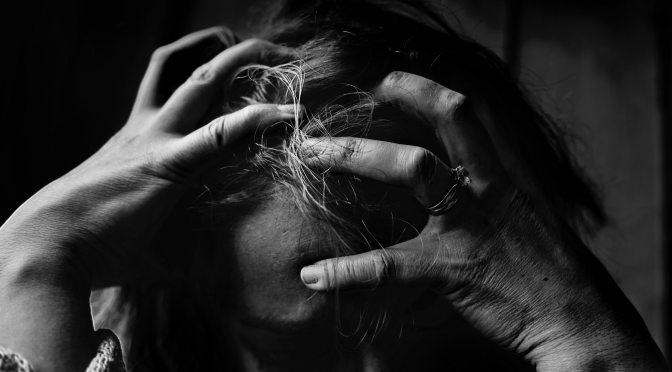
What is the first thing you think of when you try to imagine a person with schizophrenia? Would it be a dishevelled, wild-eyed, delusional person that may or may not lose their mind and hurt you? Would it be a sweet early-dementia-like patient who appears fine most of the time but is prone to hallucinations, delusions and sometimes anger in their confusion? Science, and the real world would say that the latter is a closer portrayal of Schizophrenia.
What is schizophrenia?
Schizophrenia is defined as a psychiatric illness that is characterised by losing touch with reality in a state of what is known as psychosis. It can appear suddenly or can be gradual and progressive. There is no known cure for schizophrenia and so treatment involves the use of drugs to control symptoms, although 25% of those that experience an episode of schizophrenia will recover completely.
The diagnostic criteria from the DSM-V is as follows:
- The presence of 2 (or more) of the following, each present for a significant portion of time during a 1-month period (or less if successfully treated), with at least 1 of them being (1), (2), or (3): (1) delusions, (2) hallucinations, (3) disorganized speech, (4) grossly disorganized or catatonic behaviour, and (5) negative symptoms.
- For a significant portion of the time since the onset of the disturbance, level of functioning in 1 or more major areas (eg. Work, interpersonal relations, or self-care) is markedly below the level achieved before onset; when the onset is in childhood or adolescence, the expected level of interpersonal, academic or occupational functioning is not achieved.
To see the full list of criteria click here
Symptoms in schizophrenia are termed ‘positive’ or ‘negative’. Positive symptoms are those that are brought by schizophrenia; meaning you wouldn’t have them if you didn’t have schizophrenia. These are symptoms such as hallucinations and delusions.
Negative symptoms relate to things that you would have if it weren’t for a diagnosis of schizophrenia. These are symptoms such as being unable to move (catatonia), or feeling less emotional or motivated.
What causes schizophrenia?
The cause of schizophrenia is not understood, but studies have highlighted risk factors for developing the condition, such as genetics, a chemical imbalance, a persons’ environment.
There’s currently a movement, more so in America than the UK but it applies worldwide all the same, that is lobbying to push the World Health Organisation to reclassify schizophrenia as a neurological condition, much like Parkinson’s or dementia.
When a move like this occurs, it’s clear to see just how strongly stigma still clings to mental illness. We live in a world, sadly, where people with a certain ‘type’ of illness are accepted and cared for by both people and officials more than that of another type. It is more socially acceptable and pitiable to be diagnosed with a neurological disorder than it is a psychiatric one; to see a medical doctor and not a psychiatrist.
Raymond Cho, M.D of SARDAA (Schizophrenia And Related Disorders Alliance of America) has been campaigning for the change and is quoted as saying “There is scientific consensus that the illness is a brain-based, highly heritable illness. There is overwhelming evidence that schizophrenia is a neurodevelopmental disorder with disease processes commencing early in neurodevelopment and manifesting as subtle neurologic and behavioural abnormalities long before DSM-defined illness onset.”
It has been found that physical abnormalities are more prevalent in people with schizophrenia than people without, adding weight to the theory that schizophrenia is a condition that develops during foetal development and is therefore neurological in nature.
John Snook, executive director of the Treatment Advocacy Center is bolder still and says that “If schizophrenia was a disease that we just discovered today there would be no question that’s how we would classify it” – Powerful huh?
Symptoms that a schizophrenia patient might experience include:
- A chronic lack of interest
- Problems with concentration
- Problems with memory
- Psychotic symptoms – hallucinations and delusions
- Becoming overwhelmed in social situations
- Avoiding people or situations
- Becoming withdrawn
- Anxiety
- Neglecting self-care
- Incoherent speech
- Mood changes
Sad, isn’t it? It’s also sad that every one of the above symptoms can be found in dementia too.
As mentioned before, schizophrenia’s most known characteristic is psychosis. You know the symptom that puts fear into everyone that has read the Daily Mail? Here are some other causes of psychosis:
- Brain tumour
- Brain cyst
- Dementia
- Parkinson’s disease
- Huntington’s disease
- HIV
- Epilepsy
- Stroke
- Postpartum psychosis
- Bipolar
Almost all of the conditions on the above list would warrant sympathy and compassion from the world populace – would schizophrenia? Psychosis in schizophrenia and bipolar are associated with violent behaviour – what about dementia patients that exhibit psychosis and are violent? Why aren’t we afraid of them?
Because of stigma.
The media portrayal of schizophrenia would have us believe that all schizophrenics are dangerous and unpredictable.
They have a split personality or multiple personalities (completely different disorder and again, nothing to be afraid of.)
Here and here are two heart-breaking stories of dementia patients that have committed murder. Do you think that society is going to begin to fear dementia patients? Society acknowledges that these patients were sick and vulnerable and that absolutely applies to the schizophrenic members of our society; they absolutely deserve the same amount of love, care and compassion as anybody with any illness – I might even argue they would deserve more compassion due to the current climate of stigma. They are far more likely to be discriminated against.
The reality is though, most schizophrenia or dementia patients aren’t always in psychosis and they are not always violent.
Regardless of whether or not the illness is reclassified, why should it matter? It shouldn’t. These patients have an illness that they did not ask for and an illness which (like many others) has a huge impact on all aspects of their lives. Any person with any illness, mental or physical, deserves compassion and understanding. Poorly people have enough to deal with, so let us learn to accept them without labels and judgement, and let’s keep on spreading awareness and changing the world.
Sources:
http://www.soonerthantomorrow.com/blog/2019/2/25/6zrk92dl8f0ipjgp7q1i4hyujwce51
https://www.medicalnewstoday.com/articles/248159.php
https://www.politico.com/story/2019/01/05/schizophrenia-brain-disease-1059386
https://emedicine.medscape.com/article/288259-overview#a2
 onmental.health.blog
This is great Emma. Keep up the good work!
LikeLike